Silence In The Park

[originally published in 2013, this is extracted from my book Our Place [https://rmbooks.com/products/our-place ].

I’m posting it in light of a newly-published study by Jonathan Farr that documents a 33% reduction in the area of alpine meadows in Banff over less than a quarter of a century. You can read Cathy Ellis’ article about it here: https://www.rmoutlook.com/banff/i-was-blown-away-study-shows-climate-change-dramatically-shrinking-banffs-alpine-meadows-11052721 ]

Wading a cold river in the rain was not how I wanted to start day three of a nine-day wilderness trip in Banff National Park, but there was no alternative. Since my last visit, 35 years earlier, Parks Canada had demolished the bridge across the Panther River and re-christened the fire road as a trail.

When I first hiked the Cascade Trail in 1976 it was a good gravel road all the way from Bankhead, near Lake Minnewanka, to the Red Deer River. Park wardens and horse wranglers regularly drove its 80 km between the town of Banff and the Ya Ha Tinda horse ranch east of the park. They still used the Spray and Brewster fire roads too. Years earlier, in fact, the road sometimes opened for public use; my grandfather used to drive in to fish lakes that are now a two-day hike from the trailhead.

Thirty-five years after my first visit, however, the road was grown in with willows, hairy wildrye and dryas. Mine were the first human footprints this year on what had become a seldom-used single-track trail. Yesterday I had waded Cuthead and Wigmore Creeks several times, growing increasingly nostalgic for culverts, and today—June 26, 2011—I had my first major river to ford.

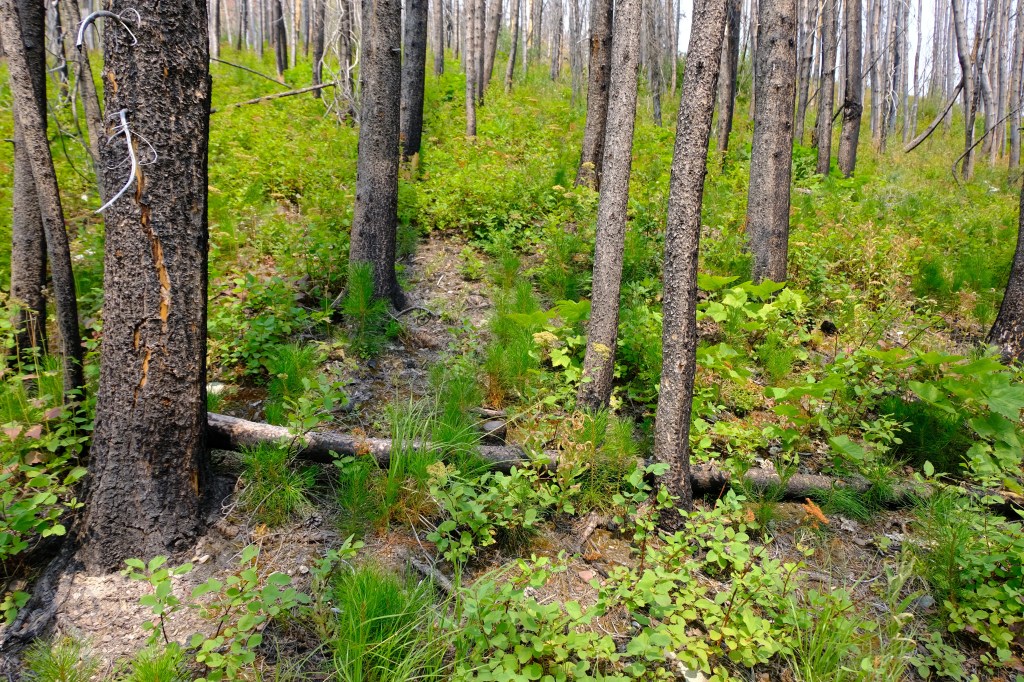
Icy water tugged hungrily at my knees as I picked a downstream route across a gravelly riffle. I emerged safely, feet aching, into a tangle of rain-dripping willows. Upslope from the willows the vegetation opened into a burned-off pine forest with lush tussocks of rough fescue—Alberta’s provincial grass—and clumps of healthy young aspens.

Sitting on a fallen log to trade wet runners for dry socks and boots, I reflected on how much had changed since my last visit here. That first hike was at the start of my career with Parks Canada; this one was at the end. In the late 1970s I was a Canadian Wildlife Service (CWS) biologist working on the original wildlife inventories of the mountain national parks. A third of a century later I retired as superintendent of Banff, Canada’s oldest, most revered and most controversial national park. 

On that first solo foray along this route I saw no rough fescue and no young aspens. Heavy, sustained grazing by the elk that over-populated the park through much of the twentieth century had repeatedly killed young aspen sprouts and suppressed the most palatable grass species. Never having known a Banff that wasn’t defined by grazed-down meadows, aging aspens black with scars as high as an elk could reach, and fire roads extending back into nearly every valley, however, nothing about that trip had seemed unnatural to me. It was the Banff I knew.

Some years later, I helped biologist Geoff Holroyd compile final reports on what our CWS study teams had learned through many months of measuring and counting just about anything that moved anywhere in Banff and Jasper National Parks. The ecological land classification of which our wildlife inventory was part was the most exhaustive study of ecological conditions ever undertaken in the mountain parks. By its conclusion, I had learned that lovely scenery can conceal a lot of ecological problems.

And we hadn’t even begun to think seriously about what climate change might mean to Banff.

The sad state to which the park’s aspen groves, willow thickets and fescue grasslands had deteriorated by the early 1980s was partly the result of too many elk and partly the result of too little fire. The too-many-elk part of the problem resulted from too few predators, especially wolves. They were then only beginning to re-colonize the southern Rockies after having been poisoned and shot out during the 1950s and 1960s. Bears, too, can be important predators on elk calves. Bear studies by Stephen Herrero, David Hamer and Mike Gibeau, however, showed that the park’s many roads and poorly located trails were displacing grizzly and black bears from their most productive habitats and exposing them to increased risk of conflicts with people and collisions with vehicles and trains.

The too-little-fire part of the problem had a lot to do with the determination with which Parks Canada and neighbouring agencies fought back whenever fires flared up after lightning storms or human mishaps. Fire is among the most important agents of ecosystem renewal in western Canada. Lodgepole pine, aspen, rough fescue and countless other species rely on wildfires to put potassium back into the soil, open up the vegetation canopy, knock back competing plants and produce ideal conditions for regeneration. But, by the 1980s, fire had become almost a stranger to the forests and grasslands it had helped sustain for millennia.

The Cascade Trail I was following, in fact, was originally a fire road built so crews could quickly extinguish backcountry blazes.

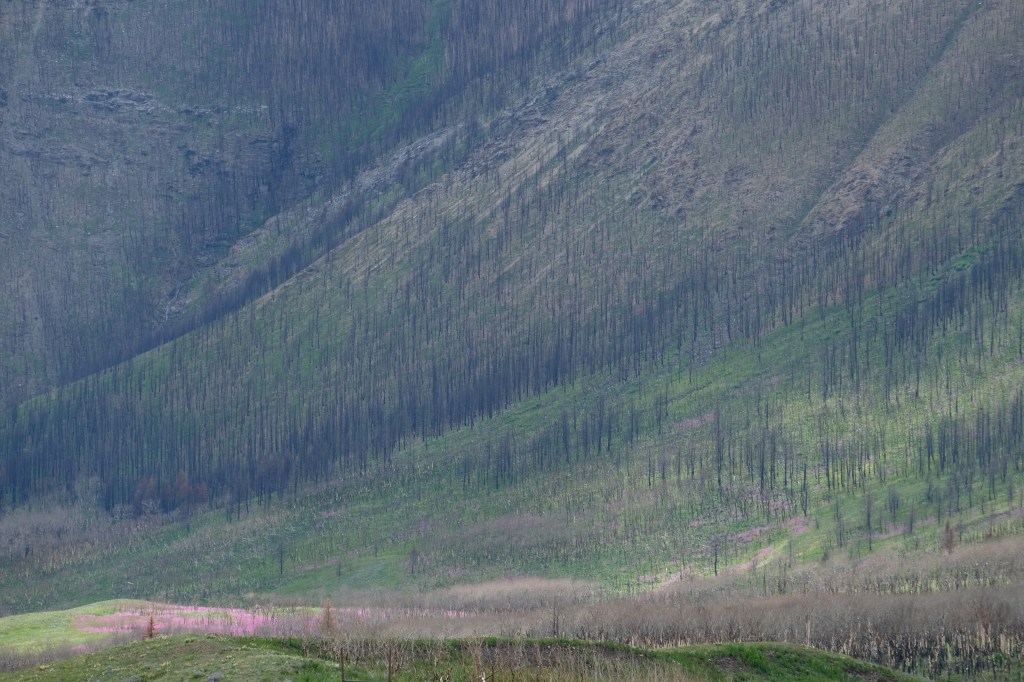
As I set off up Snow Creek along the former fire road on this June morning I was surrounded with the blackened spars of dead lodgepole pines. Parks Canada’s fire crews had not fought these fires—on the contrary, they had ignited them. Since the late 1980s Banff’s fire specialists have been recognized as international leaders in the science of using prescribed fire to restore ecosystem health.

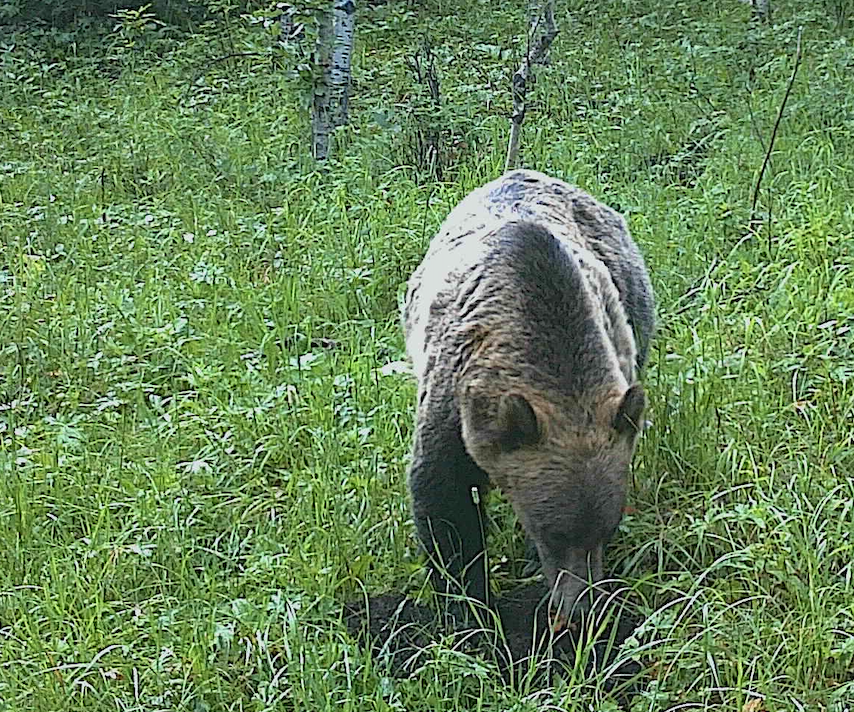
As an ecologist, I was gratified to see the results—a patchwork of hillside grasslands, aspen woodland, patches of unburned pine forest and lush shrubbery where three and a half decades earlier I had hiked through a monotony of pine trees. As a hiker, however, it proved a bit disconcerting. A short way up the trail, I rounded a bend to see a grizzly bear eating sweetvetch roots 60 metres away. A quick glance around confirmed that, should events demand that I climb a tree today, I’d be out of luck. They had all been burned through. 

The bear, however, fled the moment he spotted me. I don’t know how many human beings he had seen in his life, but I was almost certainly the first one he met in 2011.

During the first eight days of this wilderness pilgrimage the only sign of humans that I saw was a single horse track. And yet, I knew the park was crowded with people. More than three million visitors flock to Banff each year. There were major special events scheduled for the area near the town of Banff during the time of my hike, and the campgrounds were full. Yet mine were the only tracks amid this mountain beauty. It seemed strange.

A long walk in the lonely wilds is a good opportunity for contemplation. Reflection has a particular edge and poignancy when it comes at the end of one’s career. What, if anything, had Parks Canada gotten right during my working years there? Several days later, when I finally arrived at Lake Louise, I had concluded that we had managed to get a lot of things right. 

Banff is in a wilder and more natural state today than back when I first discovered it. Wilder, because fire roads like the Cascade have been closed to motor vehicles and turned back into trails, while at the same time unnecessary facilities and fences were pulled out of front-country valleys to remove obstacles to wildlife movement. More natural, in part, because fire and wolves are back. The ecosystem has responded with fewer elk, more aspens and fescue and greater vegetation diversity. More natural, too, because bears no longer feed in garbage dumps, and in foraging for natural foods across the mountain landscape they are far less likely to die on the Trans-Canada Highway now that it has been fenced and fitted with crossing structures. Grizzlies die unnatural deaths today at less than half the rate they did in the early 1980s.

Clearly, the elements of Banff National Park’s ecosystems that respond to park management decisions such as whether to close or fence roads, ignite prescribed fires, protect wolf dens or open up corridors of secure habitat for sensitive species such as grizzlies, cougars and wolves had all improved. Challenges remain—like too-frequent deaths of bears from collisions with speeding CP Rail trains and the spread of invasive plants and fish—but on the whole, today’s Banff is in better shape than it was when I joined the organization that manages it.

I should have felt good, but I didn’t. 

Banff and Canada’s other national parks face bigger challenges than Parks Canada can solve by itself. Global changes, resulting from the thousands of decisions people make daily across the continent, threaten to overwhelm even the best cared-for of park ecosystems.

I was painfully aware that Banff had recently seen the loss of its last caribou—the first large species extirpated since park establishment. I also knew that Alberta glaciers have shrunken more than 25 per cent in the past 35 years – a worrisome omen of impending water challenges. But other changes I saw on my 2011 hike led me to suspect that global environmental change is causing less obvious, but more pervasive, ecological damage throughout the park.

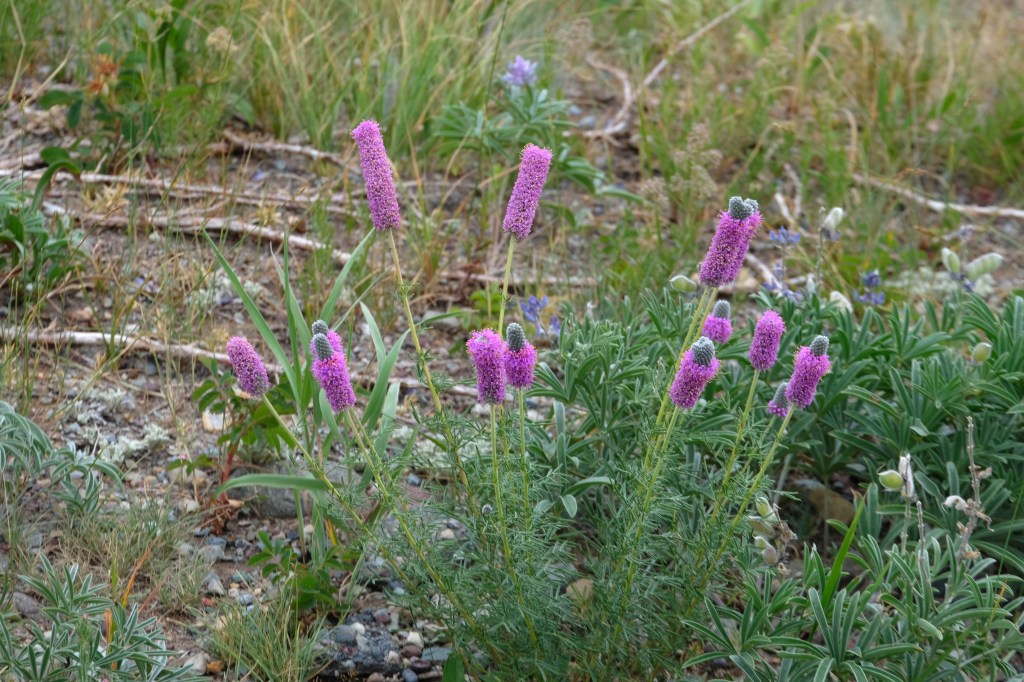
From its earliest days, flower-strewn timberline meadows have been among Banff National Park’s defining elements. Up where forests end and the alpine emerges, generations of artists have been enthralled and hikers inspired by the beauty of timberline. Clumps of subalpine fir with gnarled old larches and whitebark pines frame almost impossibly lush openings full of glacier lilies, windflower, paintbrush and valerian. The first time I broke out into Banff’s timberline country I felt like I had arrived in Middle Earth—it was hard to conceive of so much beauty set against such peaks.

Snow Creek summit was one such place. After 35 years I couldn’t wait to see it again. To my dismay, however, its timberline meadows had almost vanished. Openings once full of greenery and wildflowers were now packed with dense young subalpine fir trees. Higher still, thousands of bushy saplings dotted what before had been open alpine meadows. The late-lingering snows, frequent summer frosts and wet soils that used to keep the forest at bay can no longer be relied upon, in a time of rapid climate change.

Those high meadows, I soon realized, are filling with trees almost everywhere. A defining element of Banff National Park’s unique mountain aesthetic—and a vital habitat for many kinds of wildlife—is shrinking as forests expand upslope. While these high-elevation meadows can be expected to migrate further uphill, they need soil, and soil develops very slowly on high mountainsides. Meantime, the meadows are increasingly squeezed between advancing forests below and rocky, soil-less ridges. A warming climate is quietly erasing Banff’s timberline flower meadows.

Snow Creek summit also awakened me to another change I might have missed if I hadn’t let so much time lapse between visits.

Many of Banff National Park’s higher valleys have a sort of male-pattern baldness. The sides of the valleys are forested, but the valley floors are open. The valley bottoms are unfriendly to trees because of their high soil moisture and frequent frosts from the cold air that pools there at night. Streams in these valleys meander through mosaics of grassland, dwarf birch tangles and willow thickets.

Columbian ground squirrels live in the grassy areas and are an important food source for predators such as golden eagles and coyotes. Brewer’s and white-crowned sparrows thrive in the patchy habitats. Moose, elk, grizzly bears and, until recently, caribou rely on the lush meadow forage.

Upper Snow Creek had those sorts of meadows a third of a century ago. Today, however, the grassy parts are hard to find. The dwarf birch and willows are taller, and have filled in most of the open spaces. Charred stems show where park fire crews have tried to burn the shrubbery back, but to no avail.

Researchers recently learned that increased carbon dioxide levels in the air give some woody shrubs a growth advantage over grasses and forbs. If that’s what is happening along Snow Creek and the other subalpine stream meadows in Banff National Park, or even if the causes are as simple as warming soils or changing snowpacks, then it would represent another loss of ecological diversity traceable back to pervasive atmospheric changes. 

These sorts of changes may have contributed to the disappearance of Banff’s woodland caribou. Never abundant after Alberta built forestry roads that fragmented their habitat outside the park and improved access for poachers, the Banff part of the herd dropped from 20 or so in the latter part of the 20th century to only five in 2009. All five died that winter in an avalanche. Biologists, however, suspect that wolf predation may have brought their numbers so critically low in the first place. 

Caribou avoid predators by staying in remote areas where the snow is deep. Frequent hard winters used to kill off deer and force elk to migrate to low-elevation winter ranges east of the caribou. Today’s gentle winters enable more deer and elk to survive, in turn supporting higher numbers of wolves than would have been normal in the past. That need not be a problem for caribou, which winter in high valleys whose deep snow used to discourage wolves. The increased frequency of mild winters, unfortunately, means that wolves can now travel much more widely thanks to a shallower, denser snow pack. Even before that final accident, climate change had probably already doomed Banff’s caribou.

On my original 1976 hike I had hoped to see a caribou. This time I knew I wouldn’t.

Perhaps most troubling, however, was the stillness. Mountain songbirds are at their most vocal in late June. But day after day I hiked through a sodden stillness broken only occasionally by the song of a kinglet, Brewer’s sparrow, hermit thrush or robin. Olive-sided flycatchers were common in the recently burned forests, but some species were completely missing. The barn swallows that once nested under the eaves of every patrol cabin were gone. The businesslike chant of MacGillivray’s warbler was nowhere to be heard.

I contacted Geoff Holroyd at the CWS when I got back. He confirmed that counts of many migratory songbird species are down across most of the continent. Even in protected places such as Banff National Park their numbers have declined, but it’s because of things happening elsewhere. Many die during their night-time migrations when they get trapped in the lights with which cities, casinos and airports fill the skies. Many thousands are killed by pet cats or collisions with windows. Others can no longer find resting or feeding spots now eliminated by urban sprawl, agricultural intensification or development. Pollutants affect their health and reproductive success. Climate changes add to the stress of migration by exposing birds to unexpected weather and altered habitats. 

For all the continuing improvements in Parks Canada’s ecosystem management, Banff National Park’s timberline meadows are shrinking, its subalpine grasslands are being overwhelmed with woody shrubs and the changing landscape is going increasingly silent. And nobody seems to be noticing.

That the causes lie almost entirely outside the park doesn’t get Parks Canada off the hook. Canada’s national parks are dedicated to the people of Canada for their benefit, enjoyment and education, subject to the requirement to keep them unimpaired for future generations. 

The enjoyment part is no problem; millions of Canadians go home happy from the parks each year. But the education part requires that they also go home with new insights or understanding about how ecosystems work and how their daily choices affect the earth’s atmosphere and ecosystems – for better or worse. Without that, it’s unclear how Canada, or Canadians, get lasting benefits from those visits. Nor, for that matter, how the parks themselves can benefit—since the global forces threatening to impair those parks are the cumulative effect of decisions made by those same visitors, and their neighbours, at home.

It’s at home, not during our brief visits to national parks, that we Canadians leave lights on in high-rise buildings, putting more carbon dioxide into the air from the wasted energy while dooming migrating songbirds to death by exhaustion in urban light traps. It’s at home where we choose whether to buy gas-guzzlers or fuel-efficient cars. It’s between park visits when we decide between rapid and reckless development of tar sands or more frugal approaches to the exploitation of our boreal forests and the petroleum beneath them. Our most important decisions as consumers, and as voting citizens, are made during day-to-day life.

National parks exist at the will of Canadians—they give expression to our collective sense that nature matters, that our heritage gives us meaning, that some places are so special that they should be passed on like family heirlooms to those who come after us. But they also exist at the mercy of Canadians. 

During my 35 years working in western Canada’s national parks, the number of visitors to those parks more than doubled. Some environmental groups argue that’s a bad thing; some tourism groups think it’s great. It could be either. It all depends on what new insights, understanding and motivations those visitors take home with them. Parks Canada’s core mandate says that visitors are to be educated. And if parks are threatened with impairment, then Parks Canada is mandated to avert it. Those two responsibilities are flip sides of the same coin, because the only hope for wise decisions about land use, energy consumption and climate policy is an educated, ecologically literate Canadian population.

.

It is Canada Day, 2011, when I finally arrive at the Trans-Canada Highway near Lake Louise. Countless people are streaming through the scenery, many on their way to or from celebrations of this place we call Canada—a place whose nature we honour and purport to protect in places called national parks. None, I suspect, are aware of the silence in the woods, the shrinking meadows, the missing caribou. Most will go home feeling good about their national park. Far too few, I fear, will go home transformed or enlightened about the nature of their Canada, its ecosystems, its climate—and their choices as citizens.

It appears that, for the most part, Parks Canada got ecosystem management right by the end of its first century. The critical next challenge is ecological literacy. Our parks won’t last their next century without it. We might not either.
Good Relations

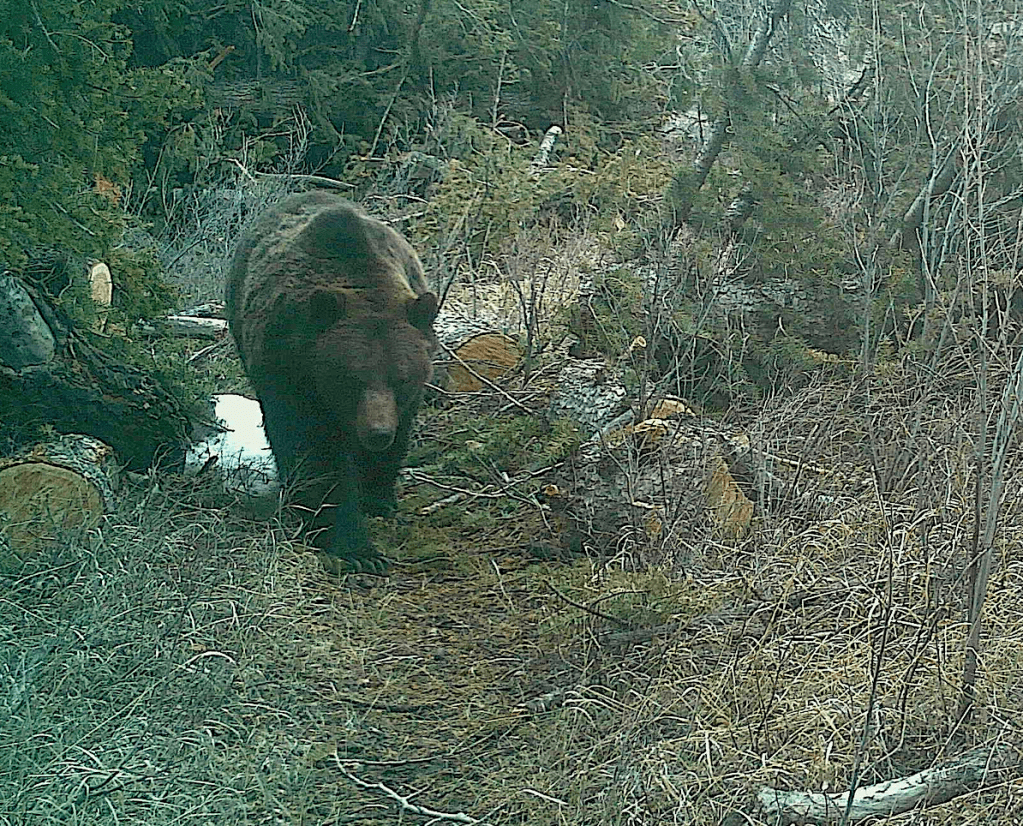
One rainy morning in the Front Ranges of Banff National Park, having just waded the icy-cold Panther River, I rounded a bend in the trail, and there was a grizzly bear.  The slope had been burned a few years previously, and the bear was rooting in the lush greenery among the black snags.

I had no intention of turning back, but neither did I feel it would be respectful or wise to try to pass so close to the oblivious bear. After a bit of thought, I pulled out the black plastic garbage bag that was protecting the top of my backpack and tied it to the end of one of my hiking poles.  Then I waited until the grizzly finally turned in my direction and spotted me. I waved the garbage bag over my head; the bear flipped ends and took off at a trot up the trail.

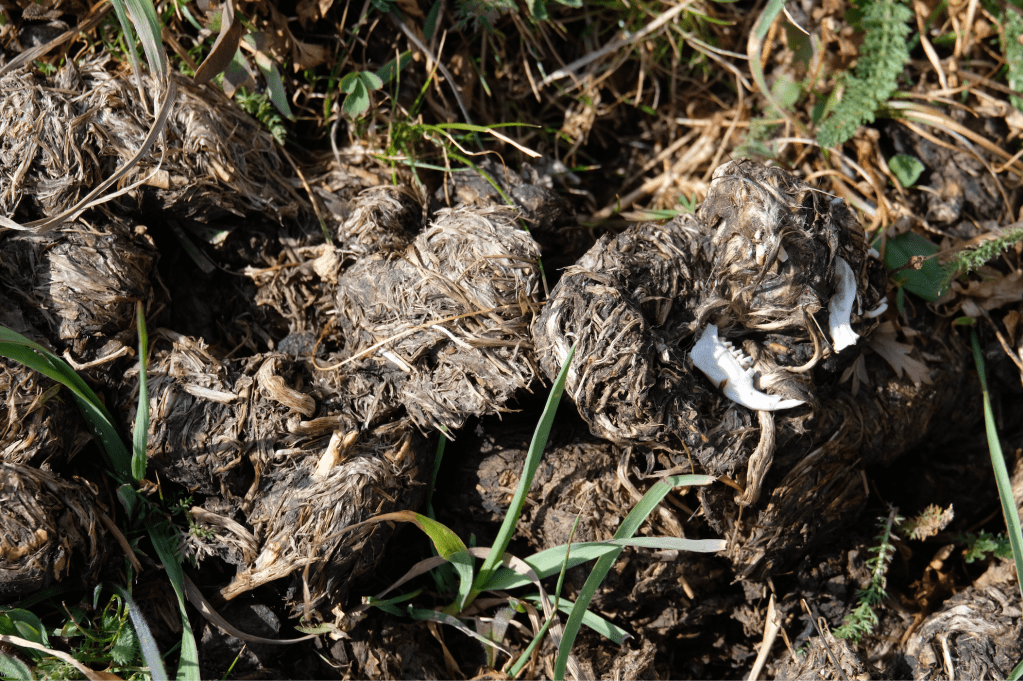
Fifty metres on, it half-turned and raised up on its hind legs, then leaned forward in a rabbit-like pose, and projectile-pooped a gusher of green into the woods. Having jettisoned its ballast, the bear dropped to all fours and bolted away up the mountainside.  I didn’t bother examining the deposit as I walked past, but the odour was a fecund mix of decomposed greenery and grizzly bear digestive system.

A normal odour for that country.  Bears eat a lot of vegetation — young grass and horsetail shoots, dandelion flowers, sweet vetch roots, glacier lily and spring beauty bulbs, and the berries of saskatoon, huckleberry and strawberries.  Their digestive systems aren’t suited for breaking down cellulose and other stringy bits, so a lot of what goes down the hatch comes out the other end relatively unchanged.  The good bits — sugars, proteins, easily-digested chemicals — remain behind. One reason bears are so food-obsessed is because they eat a lot to get relatively little.  Deer, elk, bighorn sheep and bison digest a lot more of what they eat because of their ruminant stomachs — fermentation vats where bacteria and other simple organisms help to turn the unpalatable bits into digestible material.

In order to let their rumen stomachs get that job done, ungulates have to spend a lot of time just lying around, chewing their cuds.  Bears, on the other hand, need to keep travelling around to get the nutrition they need.  They eat, they excrete, they eat some more.

Hiking the Wishbone Trail in Waterton Lakes National Park one day, Gail pointed out a tiny forest in the middle of trail.  The blob of newly-sprouted seedlings, like a flattened chia-pet, was bear poop.  The autumn previously, having filled itself up with chokecherry and saskatoon fruit, a bear had paused in the middle of the trail to deposit the remains and make room for more. The resulting pile, after spending the winter under the snowpack, had sprouted dozens of baby shrubs from seeds the bear had failed to digest.

A BC researcher, Aza Fynley Kuijt, tracked 74 grizzly bears and conducted germination experiments on wild huckleberries.1 She found that berries need bears as much as bears need berries.  “Bears don’t just eat huckleberries—they help them grow in new places,” she said. “Our findings show that this mutual relationship is crucial for both species, especially as climate change shifts suitable habitats for huckleberries.”

Left to themselves, huckleberries usually fail to reproduce. Less than 1 in every 500 seeds in a huckleberry fruit can actually sprout without help, because the seed coats have chemicals that inhibit growth. In the gut of a grizzly, however, digestive juices remove those chemicals. Kuijt’s research team found that at least a third of the huckleberry seeds excreted by bears subsequently sprout.  And since bears travel a lot, those berries often sprout in new places — half the seeds excreted by bears were more than a kilometre from the bushes that produced them, and some got deposited as much as 7 km away. 

Bears and berries live in dynamic landscapes. Trees invade meadows and gradually shade out berry patches, enabling other more shade-tolerant plant species to take over. On the other hand, fires and avalanches sometimes kill forest stands, creating new openings of the sort in which berry bushes thrive.  Bears, in exploring their home ranges, help bushes like huckleberry, saskatoon and chokecherry find and colonize those places.  In turn, the vigorous new berry stands help bears build up their fat reserves each summer and fall, helping them survive through the winter hibernation period. Berries and bears would both be less abundant if they didn’t have one another.

As a student of ecology in the late 1970s, I was taught about symbiosis, a process by which two species come to rely on one another. Symbiosis was considered a bit of an anomaly in a world of inter-species competition. The belief that nature is usually red in tooth and claw — with relationships among plants and animals defined by competition, not cooperation — flowed naturally from the dominant paradigm of the culture in which I was raised, one based on competitive capitalism and a cutthroat market economy that yields winners and losers. 

Cooperation between species was so….socialist. And surely that couldn’t be natural.

A half century later, the competitive paradigm has been turned on its head.  Symbiosis is no longer seen as an unusual phenomenon — it is the very nature of life and place. Nothing exists in isolation. We are all in this together.  Competition among organisms may help drive change and evolution, but the mutually-sustaining relationships among organisms are what keeps everything working.  Things don’t exist in opposition to one another; they exist in communion with one another.

The relationship between grizzly bears and berry bushes wasn’t considered to be an example of symbiosis back in my student days, because it was assumed that the benefits only flowed one way: from berry to bear.  In reality, as Fynley Kuijt wrote, “Considering the ecosystem services bears provide to the germination and dispersal of shrubs such as huckleberry, the mutualistic relationship between bears and huckleberry should be recognized as an important ecosystem function.”

It should be considered more than that. It should be considered a defining element of what it means to be a real bear, and of what it means to be a real huckleberry.  An individual does not exist in isolation from its relationships; it exists as a consequence of them. Without the huckleberry, grizzly bears would still be bears, but they would be less complete ones.  Without bears, huckleberries would still be bushes, but incomplete.  And neither would live where they do today, and in the ways they do today. They help make each other who they are.

One summer Gail and I took our children on a road trip down the Rocky Mountain chain to the southern edge of Colorado, a journey that took us through the San Juan Mountains. This was where Colorado’s last known grizzly bear died in 1979. The old female bear attacked a hunting guide in self-defence after having been surprised at close range. Against all odds, he managed to kill her by pushing a hunting arrow into her throat as she mauled him.

That incident happened in the southern edge of the San Juans, but as we drove through those mountains it seemed to me it could have happened anywhere there. The San Juans are some of the finest-looking grizzly bear habitat I’ve ever seen: long, steep green avalanche meadows, rich riparian mosaics along tumbling trout streams, aspen forests and dark timber. Grizzly bears simply belong there. But for almost half a century, they have been gone. There are still plenty of black bears to gorge on saskatoons, huckleberries and other wild fruit crops there, and to deposit the undigested seeds in new settings, but the once-abundant grizzly bears are gone. A relationship that once defined both the grizzly and the San Juans has been ended.

Those mountains had a forlorn beauty about them. Like faded paintings, they were less than they should have been. There was a smallness that hadn’t always been there; like an empty chair at the family table, when someone won’t be coming home again.

Grizzly bears have many relationships that make them who they are, and that help make other things who they are too.  A few months after that Colorado visit, I rode up Yarrow Creek with other park wardens, heading for a trail that follows the Waterton Lakes National Park boundary west from the head of the valley.  For well more than a kilometre, the floodplain meadows looked as if they had been rototilled by some wilderness gardener.

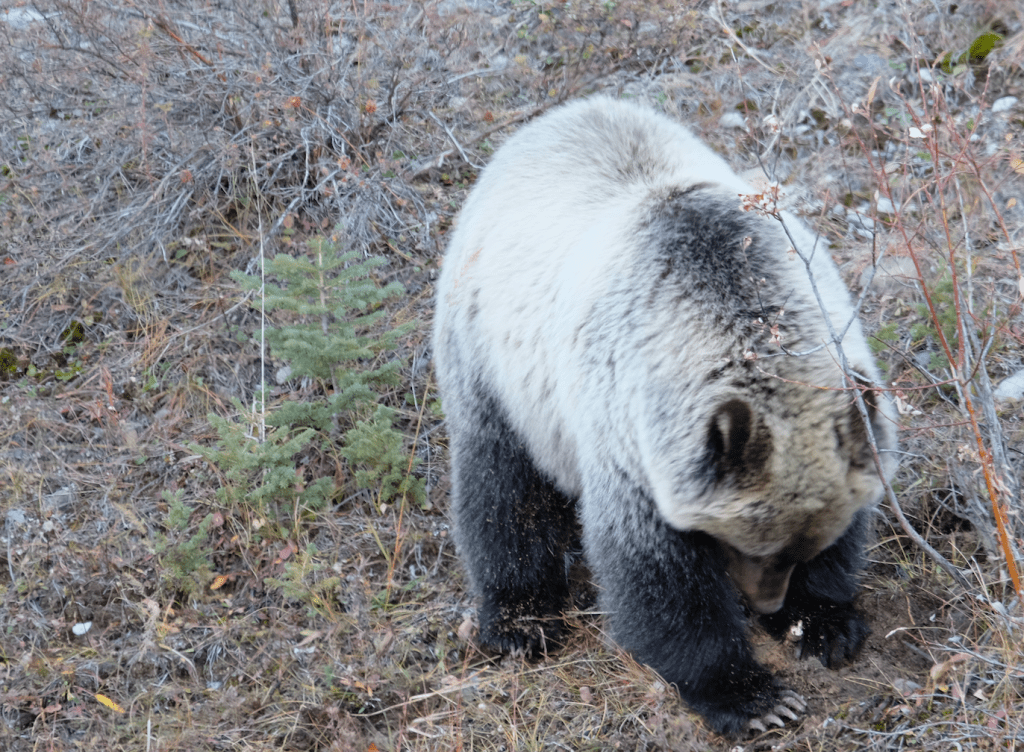
Indeed they had; the churned up meadows were the work of grizzly bears. Constantly rearranged by spring floods, mountain streams tend to meander along their valley bottoms, every so often changing course and leaving their former channels to fill gradually with vegetation.  Some of the colonizing plants are valuable bear foods.  Sweet vetch is a particular favourite in early spring and late fall, when the stringy roots are full of stored starches and proteins.  Glacier lilies and their bright little companions, spring beauty, similarly store nutrients in underground structures – bulbs and corms.  Grizzly bears follow their noses through the meadows and use their powerful forelegs and long claws to tear up sods and eat the hidden treasures.

But just as is the case with berry bushes, those bears are not exploiting that food source; they are sustaining a relationship.  Sweet vetch and other floodplain plants are pioneers.  They thrive best on recently disturbed ground where there is little competition from other plants.  As the meadows mature, those other plants take over and the pioneers gradually become scarce.  When a grizzly bear digs its way through a meadow, however, it sets the successional clock back by creating anew the raw, fresh soil in which those plants thrive.  At the same time, it leaves fragments of roots and bulb in the newly cultivated soil.  When human gardeners do that, it’s called dividing perennials. When bears do it, it’s the same thing. Bears are gardeners too.

Sweet vetch would still exist if there were no grizzly bears. It still grows in the San Juans, after all. But its distribution and abundance are different there than when its relationship with the grizzly bear was still intact.  Along Alberta’s Rocky Mountain front ranges, whole slopes of yellow and purple sweet vetch offer mute evidence that the great bear still lives here; they would be limited only to soils renewed by other kinds of disturbance if it didn’t.  Like in Colorado.

Popular hiking trails like Chester Lake, in Alberta’s Kananaskis Country, are closed annually to allow grizzlies to forage in peace in glacier lily meadows that would have become grass and willow long ago if it weren’t for the annual renewal of a relationship that benefits both the flowers and the bears — and hikers, who thrill to the sight of the bear diggings, watch the forest edges warily, and take pleasure in the delicate, golden beauty of the lilies.

Those relationships do more than benefit the plants, the bears and the hikers. They define them. Each is, in part, the other because each helps make the others whole.  Flowers, bears… hikers too.

Hikers in the San Juans don’t see roto-tilled meadows any more. They don’t worry about surprising a grizzly bear. “It must be poor life that achieves freedom from fear,” wrote legendary conservationist Aldo Leopold back in the 1940s. Grizzlies still occupied the San Juans then, but Colorado was well on the way to achieving the poor life of which Leopold warned. Colorado’s mountains today remain no less beautiful, but there is a hollowness there that makes them less than they were, and that makes those who sojourn there a little less whole too.

The bear makes the huckleberry more of what it was meant to be.  The huckleberry makes the bear more of what it was meant to be.  And both, I would argue, make us more of what we were meant to be.  Our relationships, after all, are who we are.

One August morning Gail and I hiked in to a sunny mountainside in southwestern Alberta to pick our winter supply of huckleberries.  It was a bumper year; the bushes were heavy with fruit. We were soon lost in the task, hunkered down a few metres apart, surrounded by the peace and beauty of the place. Birds rustled in the bushes around us, filling up with fruit that would help to power their fall migration flights. Huckleberries have many relations; some have feathers.

A particularly loud rustle made us look up. Maybe ten metres away, a grizzly bear had just stepped around a spruce tree and discovered that this berry patch was already taken. We were all taken aback, especially Gail who was closer to the bear than me and had also left her bear spray by her pack.  But the grizzly evidently had the same understanding of berry-picking etiquette as we did, and it turned and retreated into cover, leaving the patch to us.  Not entirely fair, as there is a good chance that one of its ancestors had relieved itself there and helped get those berries growing, but the whole mountainside was covered with fruit, so there was plenty to go around. The bear huffed its way past us a few minutes later and was soon comfortably ensconced in his own patch, farther up the slope.

The mountains paid no attention to the encounter. They have their own relationships with the world and they live in far deeper time than the rest of us. To the mountains, we were probably all one thing; part of its coat, as it were. The berries, the bear, the humans — I suspect those mountains saw us all as one.  In ways that matter to the workings of this world, we are.  And we’re all the better for it.

  1. Kuijt AF, Burton C, Lamb CT (2024).  Effects of bear endozoochory on germination and dispersal of huckleberry in the Canadian Rocky Mountains. PLoS ONE 19(11): e0311809. https://doi.org/10.1371/journal.pone.0311809 ↩︎

Disaster

[an invisible friend, one of many on Facebook, edits an online magazine called Hubris. An American, she sent out a plea for essays that might help her, and many others who think and feel in the same way, come to terms with the outcome of their recent election. So I tried (apologies for the Imperial measurements; I wrote it for an American publication):]

There is a pinch point in the Rocky Mountains chain that geologists call the Lewis Overthrust.  It extends across the US-Canada border and includes two of our oldest mountain national parks: Waterton Lakes, in Canada, and Glacier, in the USA. The subterranean paroxysms that gave rise to those western mountains were so powerful here that they pushed slabs of mountain rock over top of each other, like overlapping dominos, until that shifting rock had buried whole ranges of mountains and foothills.  Drive up to the Lewis Overthrust from the east and the effect can be startling: the prairie ends and the mountains are there.  No transition.

That orthographic pinch point lies east of a flattening in the landscape: the Columbia plateau. Those two geologies combine to create the perfect storms.  Storm after storm; westerly winds sweep inland from the Pacific Ocean and, finding little resistance through the Columbia plateau, pile up against that skinny bit of mountains before spilling over the top and sweeping down to the prairies.  It’s a continental-scale Bernoulli effects that yields relentless winds on the eastern side of the mountains, with gusts that regularly exceed 80 mph.  Anywhere else, that would be called hurricane-force.  In the lee of the Lewis Overthrust it’s called the chinook wind.  When we lived in Waterton, it sometimes blew our children down the street.  Fortunately, it blew them to school. Getting home could be a bit of a problem.  They wore ski goggles in winter, and sometimes crawled.

On August 29, 2017, during an intense summer thunderstorm, lightning struck a tree in southwestern British Columbia, about five miles west of the Continental Divide, on Kenow Mountain.  The tree burst into flame, and the fire spread. The forest had been primed by drought and heat… and after the storm blew through, a chinook wind developed.  By September 11 when gusts of over 90 mph drove the fire across the Continental Divide, fire crews didn’t stand a chance.  They had set irrigation sprinklers up to protect the park townsite, but when that roaring inferno arrived all they could do was to get out of the way and watch the fire storm burn through.  The town was saved, but almost half of the 195 sq.mile park burned.  And it wasn’t just the trees and grassland that burned; the fire was so intense that it burned the very soil, right down to the rocks and gravel.   It was an utter disaster.  It could have been worse, but the turbulent wind created back eddies that stalled the advance of the fire until a change in the weather settled it down and enabled the fire crews to get back in and start mopping it up.  Everywhere there were dead and wounded animals. The place ached with loss; all its life and stories and meaning seemed gone with the smoke.  News stories reported that the park was destroyed

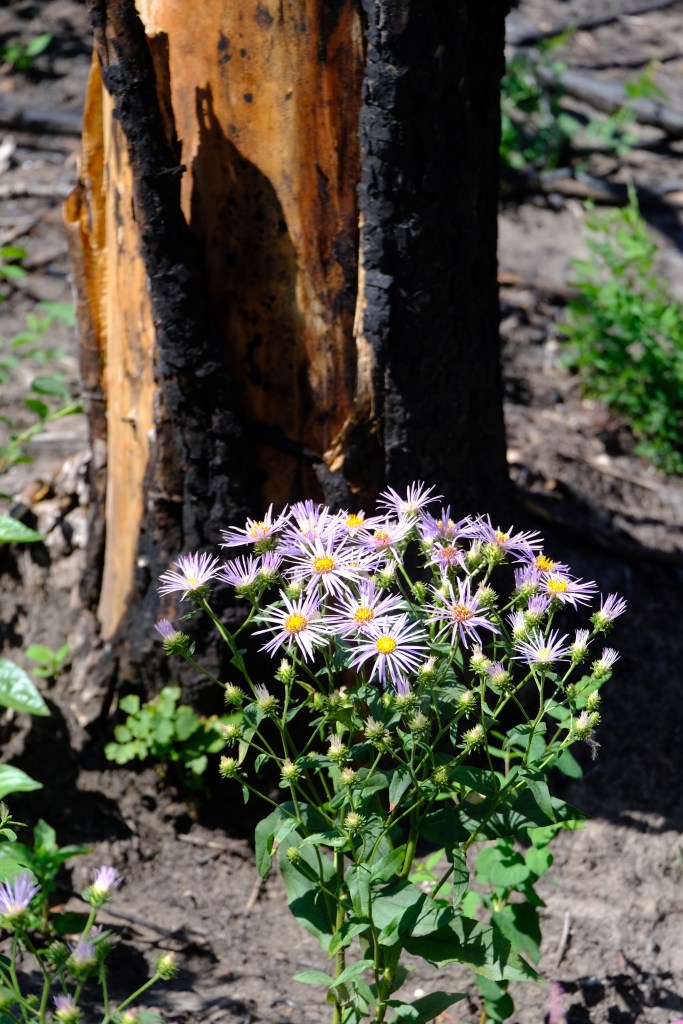
I visited the national park three weeks later.  It was burned to the very mountain tops, a bleak place of blackened tree trunks, grey ash and silence.  And in the charred prairie along the park road: brilliant green spikes of emerging grass. They didn’t look defiant, but they looked determined.  They knew the place was meant to be alive. Theirs was a wisdom deeper than ours.

In the ensuing decade, it has indeed come alive.  Many of the burned trees have fallen but as many more still stand, their boles now riddled with holes drilled by woodpeckers that have been attracted by all the wood-boring insects thriving in their new homes, homes created by flame. Absent the stifling shade of closed coniferous forest canopies, the understory has erupted in greenery.  When I worked in Waterton in the 1990s, I knew of three small patches of wild hollyhock; now those green pillars of floral beauty seem to be everywhere.  In summer, the flower mosaic has to be seen to be believed. Bighorn sheep feed on green slopes where encroaching forest had previously been shrinking their ranges.  Eagles still wheel above the summits; the bull trout still return to spawn. It isn’t the glorious place it was.  But it’s becoming the glorious place it’s now meant to be.  It wasn’t a disaster; it was a turn of the circle.

Immediately after the fire, teams of archaeologists descended on the park. The archaeologists, including two young Siksikaitsitapi (Blackfoot) researchers, saw the fire’s aftermath as a once-in-a-lifetime opportunity to find evidence of previous human occupation. With the vegetation and duff burned away, old campsites, structures and artifacts lay exposed in the ashes. Crews hastened to inventory the park’s archaeology before it could be obscured again by vegetation. They found camps and remains everywhere — a startling record of more than 12,000 years of continuous occupation by Niitsitapi. The archaeologists had to revise their story; this was not a place the Blackfeet visited occasionally or travelled through to trade or hunt; it was a centre of their existence. The Siksikaitsitapi are not just a prairie people — they are mountain people. But that had almost been forgotten.

The researchers decided to examine the mountaintops. They found seventeen different vision quest sites.

Dr. Mike Bruised Head, a Kainai researcher, described in his Ph.D. dissertation* how deeply troubled he felt. These Itaksiistsimoo’pi were meant to be places of fasting and visions. But almost nobody visited them anymore. There was little point. The mountains no longer had their original Indigenous names. A vision quest begins with an invocation of the mountain’s spirits, and that requires that the seeker pray to the mountain by its name. The names seemed to have vanished, to be replaced with names that had no relevance — like Mount Vimy, named after a battlefield in faraway France. In consultation with elders and other knowledge-keepers, Mike Bruised Head determined that its true name is Sakiimaapi.  One by one, he has been working to find the original names of those sacred mountains and restore Niitsitapi relationships with the place.  The park’s new interpretation centre uses those original names, and the interpretive signs sprouting up across the recovering landscape tell the deeper story of meaning that has emerged from those ashes.

This year, Parks Canada and the Blackfoot Confederacy announced a new Indigenous Guardians program that employs Siksikaitsitapi people to monitor and protect these sacred lands.  In doing so, the guardians will rediscover themselves, while offering new relationships and learnings to park visitors many of whom are, themselves, in search of deeper meaning and connection.

Barely a decade after disaster, the park is experiencing both an ecological rebirth and a renewal of its names, meanings and cultural relevance. It isn’t the place it was. It’s becoming something better.

When disaster strikes, it’s all we see. The despair and horror come from seeing the end of what we knew and loved, and the certain knowledge that there can be no going back. What is unknowable, in that awful moment, is what might come next; what possibilities await beneath the ashes.  But they are there, and after the flames burn down and the last wisps of smoke dissipate into the winds, the world will still be with us and it will have lost none of its magic. None. Some of its magic, in fact, will have been set free.

One of the most common trees in that wind-whipped landscape along the Lewis Overthrust is the lodgepole pine.  It forms dense stands that, as they mature, grow a dense, connected canopy that shades the ground below.  By the time a lodgepole pine forest has grown old, its thirsty roots and crowded canopy have suppressed or killed many of the other plants that were there when the trees were young and small.  And that’s okay; snowshoe hares, squirrels and crossbills like those dense old forests.  But there is a sense of suppressed sameness to a landscape dominated by those pines.

Fortunately, they burn.  The older and denser they are, the better they burn.  That’s one reason the Kenow fire was so intense; not only was it wind-driven but it was fueled by aging pine forests full of tree resin and crowded fuels.  Those trees are dead now, and the other kinds of plants whose growth they once suppressed will have their time in the sun again for a few decades.

But lodgepole pine is a paradox: it exists to be killed by fire, yet it relies on fire for its very existence.  Its cones are like rocks, sealed tight by resin, their seeds securely stored inside.  Fire burns off the resin coating and twists the cone scales open, releasing the seeds.  The dead lodgepole pine forests of Waterton Lakes National Parks, today, are full of live lodgepole pines: young ones, reaching their baby fingers joyfully into the sun beneath mountains that are rediscovering their ancient names, amid a coming together of Treaty People — both the Niitsitapi who were always here and the more recently arrived who hike the trails as tourists. The aftermath of disaster offers new hope of deep, real sorts of reconciliation.  Not just between peoples, but between people and place.

And this is what was unimaginable in the moment when the flames came.

There are other kinds of disasters. Sometimes an election’s outcome can feel like a disaster.

When those disasters beset us, it can be worth reflecting on the Kenow fire and the certain truth that magic sometimes is just waiting for its moment, even if we can’t see to the other side of the flame and smoke. Things that happen are never just events; they are teachings that are given to us by the living world that gives us all our life and all our meaning. Fires burn out; new things emerge. Sometimes better things. This is a truth given to us.

I’m trying to learn to think like a forest — to listen to the teachings of the world.  It is always the end of things; it is always the beginning of things.  The names of our mountains outlive the battlefields after which some might try to name them.

It will be okay.  It might, eventually, even be better.

* reference: Ninna Piiksii, Mike Bruised Head. 2022. The Colonial Impact of the Erasure of Blackfoot Miistakistsi place names in Paahtomahksikimi, Waterton Lakes National Park. Ph.D Thesis, Dept. of History, University of Lethbridge.